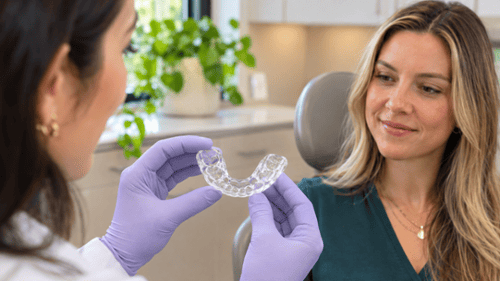
If you've been faithfully wearing your night guard and your jaw still aches, you're not imagining it, and you haven't done anything wrong. A night guard is designed mainly to protect your teeth from the wear and pressure of clenching and grinding. For many people it does that job well. But protecting your teeth and easing jaw pain aren't always the same thing. When discomfort continues, it's often worth looking at what might be driving the clenching in the first place.
Why Your Jaw May Still Hurt
Every person's situation is different, and there's rarely one single answer. Here are a few possibilities we look at.
Your jaw muscles may still be working overtime
A night guard places a cushion between your teeth, but it doesn't always stop the muscles from clenching. Those muscles can stay tight and tired, leading to soreness in your jaw, temples, or face. Many people also clench during the day, while driving, working, or concentrating, when the guard isn't in at all.
Your bite may be worth evaluating
How your teeth come together is one of the things worth looking at. Bite relationships can change after new dental work or gradually over time. An uneven bite doesn't necessarily cause jaw pain or clenching, but evaluating it is part of understanding the full picture.
If your bite has felt off since a crown or filling, our article on why your bite may feel off after a crown explains what may be happening.
Sleep and breathing may play a role for some people
Research has found that nighttime clenching and grinding are linked with sleep-disordered breathing in some people. Not everyone who clenches has a breathing concern, but if you snore, wake up tired, or start your day with headaches, it's worth mentioning to your dentist.
Your guard may need a check
Night guards wear down, and mouths change. A guard that no longer fits well, or one that was never adjusted to your bite, may not feel as comfortable as it should.
What a More Complete Evaluation Can Look Like
If you've already read about what clenching and grinding may be telling you, you know the basics. This is the next step: understanding why you're still uncomfortable with a guard.
At Ohio Holistic Dental Center, a thorough evaluation may include:
-
A conversation about your history, including when the pain started, past dental work, injuries, and how you sleep.
-
An exam of your jaw joints and muscles to see where tension and tenderness show up.
-
A look at your night guard, checking its fit and wear patterns.
-
A bite evaluation, which may include T-Scan digital bite analysis. T-Scan shows the timing and relative force of your tooth contacts. These measurements add helpful detail to your dental exam, but they don't diagnose the cause of pain on their own.
-
Airway and sleep screening when appropriate. When clinically indicated, a 3D cone beam scan provides detailed images of your jaw, joints, and airway anatomy. If sleep-disordered breathing is suspected, an at-home sleep study read by a medical doctor can evaluate it.
From there, we talk through what we found and the options that make sense for you. When something falls outside dentistry, we're glad to coordinate with your physician or other providers.
You can learn more on our TMJ and bruxism treatment page.
Frequently Asked Questions
Should I stop wearing my night guard if it isn't helping?
Please don't stop without talking to your dentist first. Even when it isn't easing your pain, your guard may still be protecting your teeth from wear and chipping.
Can a night guard make jaw pain worse?
It's possible. A guard that fits poorly or doesn't match your bite can sometimes add to discomfort. Having it checked is a simple first step.
How do I know if my clenching is related to sleep?
Common clues include snoring, waking up unrefreshed, morning headaches, or a partner noticing pauses in your breathing. A sleep study interpreted by a medical doctor can help identify sleep-disordered breathing. It doesn't establish on its own what's causing your clenching, but it adds an important piece to the picture.
Is jaw pain always a TMJ problem?
Not always. Jaw discomfort can come from muscles, the joint, your bite, your teeth, or even your sinuses. A careful evaluation helps sort out where it's actually coming from.
You Deserve Answers, Not Just Another Guard
If you've been told to just keep wearing your guard and the pain hasn't changed, it makes sense to want a closer look. We'd be honored to listen to your story and help you understand what your jaw may be telling you.
Schedule a Consultation with Ohio Holistic Dental Center in Centerville, Ohio, or call us at (937) 428-2288.